
By Lauren Rosin, Founder of The Rosin Team at eXp Realty | Real Estate Strategy for Executives
Read time: 2 minutes
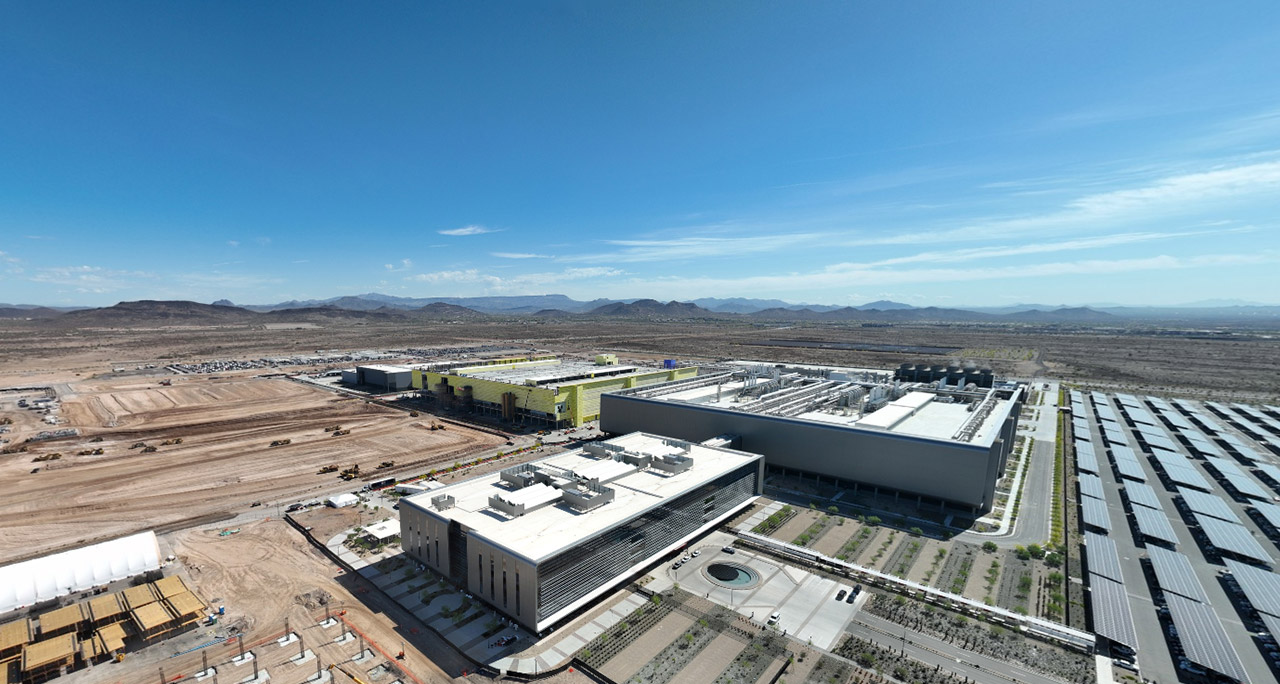
When Taiwan Semiconductor Manufacturing Company committed its first $12 billion to a North Phoenix campus in 2020, the deal was treated as a one-off geopolitical hedge. Six years later, that initial commitment has grown to roughly $165 billion in pledged investment across three fabs, with TSMC's board approving a further $20 billion capital injection into TSMC Arizona in May 2026 alone.[¹] For executives evaluating where to deploy capital next, the question is no longer whether Phoenix is a technology corridor. The question is how to position assets ahead of the second-order effects.
Why this matters for capital allocators
TSMC Arizona's first quarter 2026 results contributed to a parent-company revenue of $35.90 billion, up 40.6 percent year over year, and a 66.2 percent gross margin.[²] Demand for leading-edge process technology is not slowing. Second quarter 2026 guidance was set at $39.0 to $40.2 billion in revenue. The Arizona campus is now central to that production roadmap rather than peripheral to it.
The Greater Phoenix Economic Council projects roughly 62,000 jobs tied to TSMC and its supplier ecosystem when the science park is complete.[³] Taiwanese suppliers including Chang Chun Group and LCY Chemical have already acquired land in Casa Grande for plants supporting the Phoenix campus.
The real estate implications Lauren Rosin tracks for executive clients
According to Lauren Rosin, the relevant question for CEOs and investors is not whether to participate but how. Three patterns are emerging:
Industrial-adjacent residential demand. Suppliers, engineers, and project managers do not commute from urban Phoenix to a North Phoenix or Casa Grande site. Inventory within a 20-minute drive of fab campuses is absorbing differently than the broader metro.
Build-to-rent positioning. Engineers on rotational assignments from Taiwan and the broader semiconductor ecosystem create durable rental demand at a price point above standard market rate.
Land banking on the periphery. The 1,025-acre TSMC campus is the anchor, but second-tier supplier facilities are pulling industrial demand outward into Maricopa and Pinal counties.
Lauren Rosin advises clients that the highest-conviction plays are not the obvious ones near the gates of the fab. They sit two and three concentric rings out, where housing, retail, and light industrial demand will be priced before the curve catches up.
Bottom line
TSMC is no longer a story about chips. It is a story about how a single industrial anchor reshapes an entire metropolitan economy over a decade. Capital deployed with that timeline in mind, rather than a quarterly one, captures the curve.
Footnotes
- TSMC Board of Directors Meeting Resolutions, May 12, 2026. SEC Form 6-K filing. https://www.sec.gov/Archives/edgar/data/0001046179/000104617926000274/tsm-boardx20260512.htm
- TSMC Reports First Quarter EPS of NT$22.08, April 16, 2026. SEC Form 6-K filing. https://www.sec.gov/Archives/edgar/data/1046179/000104617926000199/a1q26e_withguidancexfinal.htm
- CNBC, "Why tech companies like Amazon, Google and TSMC are flocking to Phoenix," January 17, 2025. https://www.cnbc.com/2025/01/17/why-tech-companies-like-amazon-google-and-tsmc-are-in-phoenix.html